VFFS Biodiversity trail
Exhibit 04
Exhibit 04
Owls of vermont
Owls of vermont
By ????, 2025-2026 Falcons
Owls are relatively large hunting birds in Vermont and are very important for Vermont. What would happen if there were no owls in Vermont? If there were no owls in Vermont, there would be too much of their prey which would make it hard for other things in nature to stay balanced. So as you can see, owls are a very important part of our ecosystem! But if we have so many species, how do they work together?
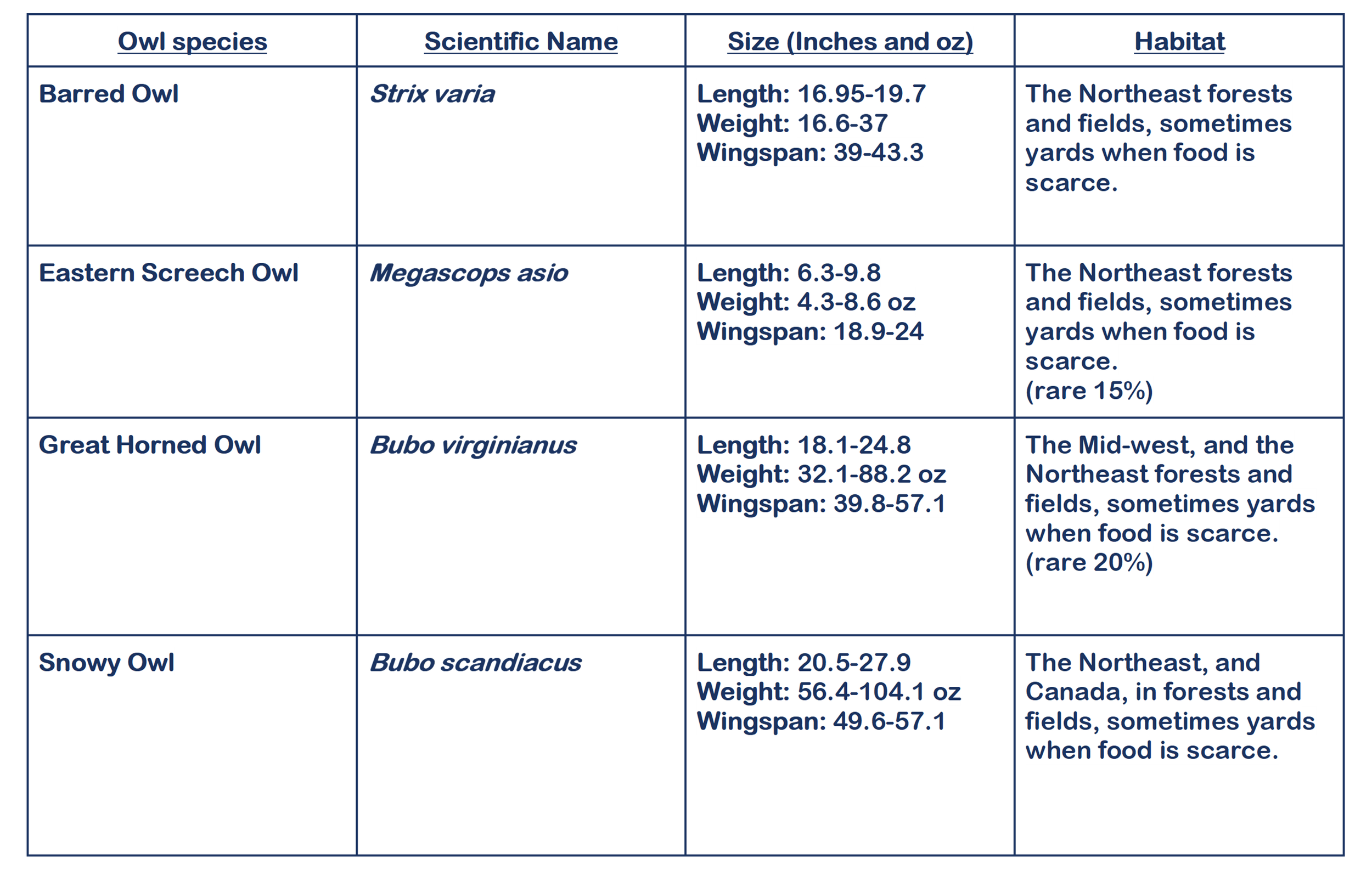
The table below shows the sizes and habitats of Vermont’s owls.
Owls live in the northeast (and mid-west) forests and fields, hunting skunks, rabbits, grouse, geese, snakes, fish, rodents; mice, voles, moles, chipmunks, squirrels & rats. They are mainly active at night, while sometimes during the winter months they have to hunt by day in order to get enough food. Barred owls do most of their hunting at night, dawn, and dusk, (which means their nocturnal,) but sometimes hunt by day. They perch on a tree, while looking and listening for rodents.
Small mammals are most of what they eat. The smaller animals are swallowed whole, and their hair and bones are regurgitated. The larger animals are torn apart by their incredibly sharp beaks. That makes it relatively easy to find their roosting place. The prey not consumed, is cashed inside old nests, or temporarily on branches.
Barred owls like to live in woodlands, and swamps. But while hunting, they hunt along a 5- to 6-mile radius. Barred owls also have adapted to man, so they will take advantage of meadows, fields, barnyards, and suburban areas. Barred owls prefer hardwood forests to coniferous forests, because they tend to have open midstory, which makes it more likely to have cavities in the wood, which they nest in. And the open understory makes it easier to spot predators of their owlets, such as snakes, raccoons and weasels.
Fun Facts About Owls
Owls have strong wings that move quickly and the feathers are soft so they are practically silent.
In the world, there are at least 155 kinds of owls.
Owls' faces are sometimes shaped like hearts.
Owls can hear stuff that goes on up to 75 feet away.
Owls do not have teeth, so they use their extremely sharp beak to tear their meat apart.
Owls have very powerful talons to kill their prey.
Owls cannot move their eyes, so they have to turn their head. Most humans cannot turn their head more than 160-180 degrees, but owls can do a 270
Owls travel a lot. They're on the move! They do not call ‘home’ home. They may sleep on the ground, in a tree, or in an old home of another animal.
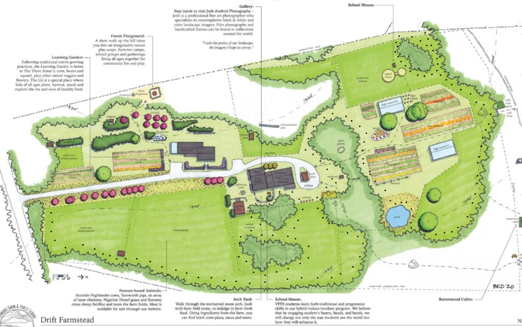
This picture shows where owls are found on Vermont Farm and Forest School. The dotted line indicates where they live on VFFS.
Links to owl photos selected by ????: