

VFFS Biodiversity trail
Exhibit 08
Exhibit 08
Mice of vermont
mice of vermont
By Luca, 2025-2026 Falcons
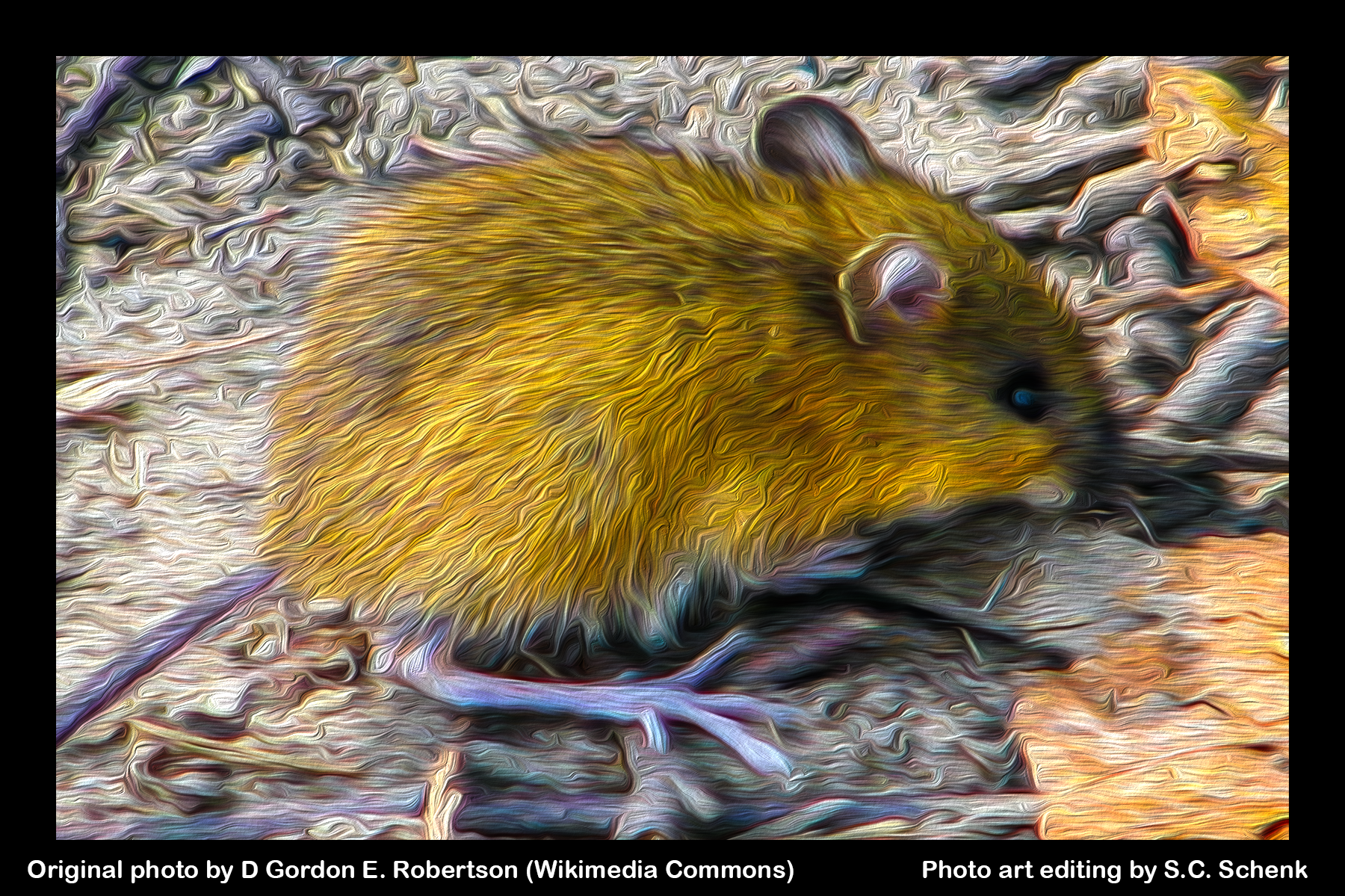
Original photo information at Wikimedia Commons.
Native Mice of Vermont
Deer mouse (Peromyscus maniculatus): Deer mice are often found in forests. They have a reddish-brown back, white belly, and a furry tail. (Photo from iNaturalist)
White-footed mouse (Peromyscus leucopus): White footed mice are very similar to deer mice. They live mostly in lower-elevation forests. (Photo from National Park Service)
Meadow jumping mouse (Zapus hudsonius): The meadow jumping mouse has a long tail and powerful hind legs used for jumping. (Photo from Buzzfeed.News)
Woodland jumping mouse (Napaeozapus insignis): The woodland jumping mouse is similar to the meadow jumping mouse but it has a distinctive white tip on its tail. (Photo from Cottage Life)
Nonnative Mice of Vermont
House mouse (Mus musculus): The house mouse is an exotic species from Eurasia that commonly lives in homes, barns, and urban areas. (Photo from The Australian Museum)
What Mice Eat
There are many things mice eat. Some things are seeds, nuts, insects, fungi, and fruits.
What Eats Them
There are a lot of things that eat mice. Some of them are owls, hawks, eagles, rat snakes, garter snakes, foxes, cats, weasels, coyotes, and skunks.
Life Span
Mice can live for a long time but in the wild they don't last long. They usually live for 9 to 12 months in the wild, but as a house-pet they can live for 1.5 to 3 years with a proper owner.
Time When Most Active
Mice are usually most active between 8:00 PM and 4:00 AM in the summer. In the winter they are usually most active between 7:00 PM and 7:00 AM.
Why I Chose This Organism
I chose this organism because I think mice are kind of cute. Also, I know some things about mice, so I decided to choose mice.
How To Find A Mouse By its Tracks
A mouse’s track is not always the same but usually it should look kind of like the picture linked below.
Physical Adaptations
Mice have a very flexible skeleton and ribcage, but they lack a collarbone. This physical adaptation allows them to compress their bodies and squeeze through holes, cracks, and gaps as small as a dime. (About 0.6 cm.)
Behavioral Adaptations
Mice have multiple behavioral adaptations, but a few are nocturnal activity, burrowing, thigmotaxis (hugging walls), and enhanced problem solving.
Habitat
A mouse’s habitat can vary from the inside of a house (for a pet mouse or infesting mouse) to woods and meadows.
Fun Facts
Mice are pretty incredible creatures from singing complex mice songs to fitting through impossibly tiny gaps, these cute and interesting little creatures are everywhere. Even though they are rodents I still chose them.
Links to mouse photos selected by Luca: