

VFFS Biodiversity trail
Exhibit 06
Exhibit 06
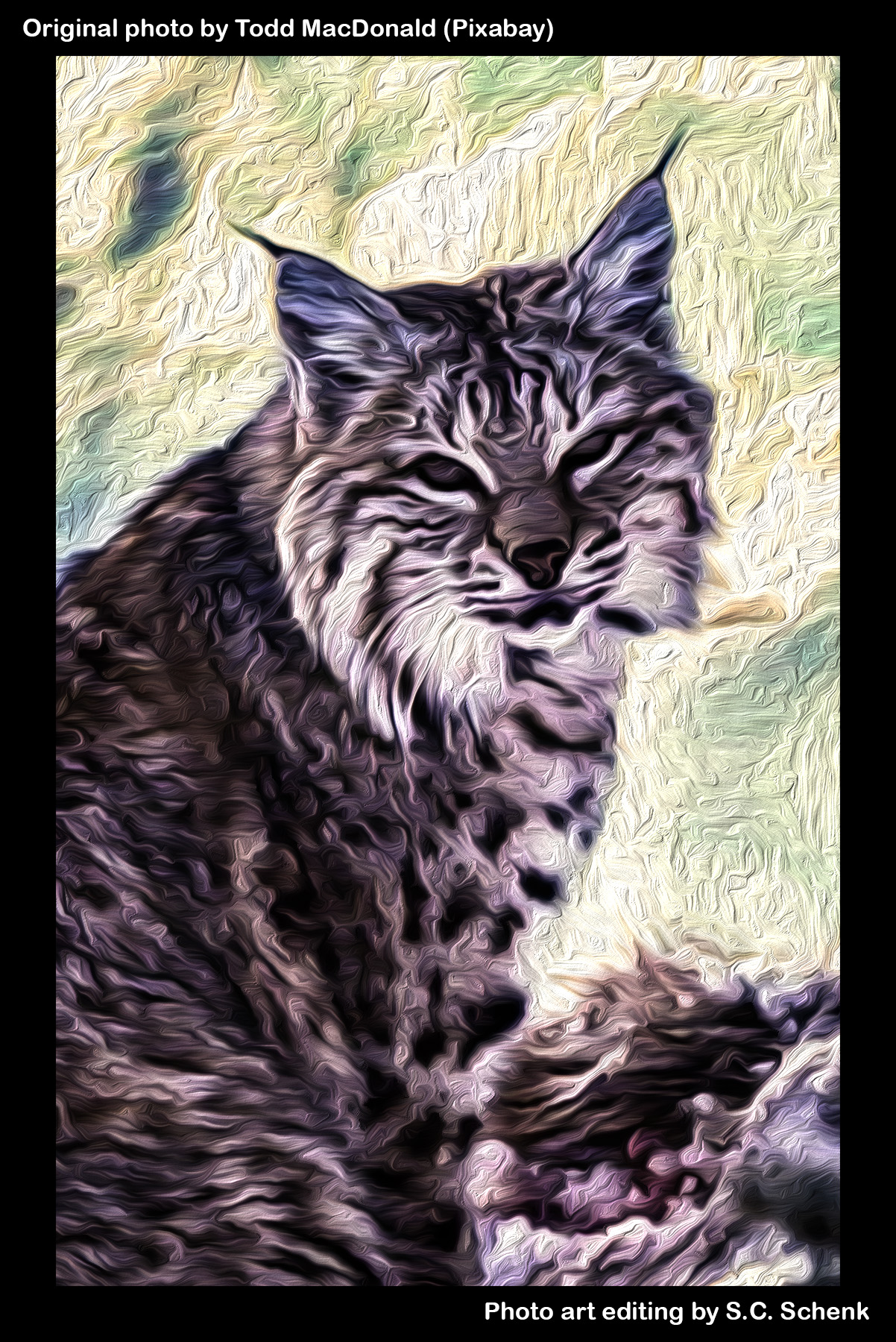
Bobcats
Bobcats
By Ella, 2025-2026 Falcons
Original photo information at Pixabay.
Common name: bobcat, Scientific name: Lynx rufus
Type: mammals, Diet: carnivores
Average life span in the wild: 10 to 12 years.
Bobcats get their name from their short bobbed tall. Bobcats are surprisingly small; in fact, bobcats are only 26 to 41 inches long. You can tell a bobcat by its white underbelly and black around it. Bobcats are usually a black and gray and brown; the mix of colors allows them to hide in underbrush to attack their prey.
Bobcats have a wide range of food like mice, snakes, and snowshoe hares, and in the winter they hunt deer. They only hunt the deer in the winter because they cannot find the little prey that they need. They don't hunt very big prey normally because they're so small and it would be dangerous for them. They normally kill their prey by breaking its spine which sets it apart from other cats, because other cats kill their prey by biting their necks to sever a main artery which instantly kills it. Bobcats stalk their prey when hunting. Some cats follow their prey in hopes of finding its family so it can hunt its family for more food.
Bobcats are very protective of their homes. In fact, bobcats are so territorial that they mate for a few short months. Sometimes a bobcat will have to change its territory because it can cause predators and people can hunt it. When they give birth, the mom takes the cubs and leaves to a new spot in its territory and starts to make a den where the cubs will be raised. Mother bobcats often leave their cubs when hunting so the cubs don't mess up the hunt, but they have to be fast or their cubs could be killed by foxes, eagles or humans. Bobcats are very good moms. On average they have 2 to 4 cubs a year, but litters can range from 1 to 6 cubs. Cubs need to drink milk about every 2 to 4 hours. Bobcat cubs stay with their mom for 10 to 12 months then it is time for them to leave. Bobcat cubs will drink their mom's milk for 2 months. Then it's time for the mom to teach them how to hunt because the mom can't be with them forever. When the time comes for the cubs to learn how to hunt their own food the mom will start to snatch the food for herself. Then their mom finds a new mate, and it starts again.
When bobcats have cubs, they regurgitate their food for the cubs when they're young because they can't go straight to eating meat. They have to start with regurgitated meat which means the mother eats it and then she throws it up and the cubs eat that. Sounds kind of gross, but it's how they live.
In captivity bobcats live 10 to 15 years as they have no natural predators in captivity. In fact, there are more big cats in captivity than there are in the wild. Bobcats only live in North America and have adapted to living in Rocky terrain and deserts. Since it's so hot in the rocky terrains in the deserts they hunt in the nighttime.
Like lions, bobcats spend most of their time lounging around when they're not hunting. They spend most of their time lounging around under trees or helping their cubs.
Fun facts:
Bobcats can go one to two weeks without food.
Bobcats eat only raw meat.
Sometimes a bobcat climbs and pounces on their prey to break their spine which instantly kills them.
Bobcats are excellent climbers like most members of the cat family.
They can swim but they prefer to stay dry. They are very strong swimmers but still they like land like most cats.
Bobcats are very smart when rated on a scale from 1 to 10 they are rated an 8.
When they jump, first they locked their head on their landing spot and then they twist their body. To stop spinning they put their legs out but if they want to spin they put their legs in. They also structure their legs out like shock absorbs to always land on their feet.
The bobcat species is considered steadily growing so they're not underpopulated or overpopulated. That's why you can hunt bobcats in some states but in others it's illegal. In the spots where it's underpopulated, hunting isn’t allowed, but when bobcats are overpopulated in the spots you're allowed to hunt them to get their population back down to its normal numbers.
Bobcats can run 30 to 35 mph which makes them really fast but like any cat they can run in fast bursts for only a certain amount of time before it has to slow down to regain energy.
Bobcats can hunt really big animals, but they stick to small ones so they don't get hurt. Hurt, sick or tired, they go hunting from sundown to sunrise, pretty much the entire night.
Bobcats can be nocturnal or non-nocturnal which means they can sleep all day and be awake all night or be awake all night or sleep all day depending on what is convenient to them.
Bobcats will sometimes bury their prey so other animals don't steal it because they're not always strong enough to carry it back to their home. Sometimes it can be dug up by other animals like coyotes and other wild dogs so it's important to always keep near it.
When bobcats trespass into another land they sometimes walk around in that land or in the watering holes, so they don't leave footprints.
When a bobcat gets hurt it's harder for it to hunt. If it is hurt, when it has young cubs, that is a bad situation because they need to feed their young cubs otherwise they will die. If the cubs already know how to hunt there is a better chance of them surviving. Bobcats can survive minor injuries like paw or tail injuries, it's just best that they can walk fine and use their tail fine because their tail helps them jump. The tail acts like the feathers on an arrow which helps it stay straight.
Sometimes when a bobcat is too weak to hunt, they can look in the desert for a carcass but it's hard to find a carcass because it's normally stripped by other animals like vultures. When they do have something, they have to eat it fast if it's a big animal because other animals will see the vultures circling above waiting for the meal to be done and sometimes redirect to get that carcass or hunt the animal eating the carcass; that's why they have to be speedy.
Bobcats get a few diseases, like they get tick bites on their bones and can get weak, and it can hurt them. They also develop these red bare spots from burning or heat since they live in the desert and sometimes there are wildfires.
Bobcats may have to walk miles to escape the fire. When a fire happens, hardest spot is to find water because water gets infected or dirtied by smoke and debris. Lions, when they're desperate, they'll drink the dirty water, but it can give them more diseases and it can hurt them more. But a smart bobcat doesn't eat or drink dirty water.
Bobcats and most mammals that eat raw meat have this chemical in their body that will break down the stuff that can hurt them, that's why humans can't just eat raw meat.
Bobcats rely on small prey but when they have to get bigger prey it's harder especially in the winter because the winter gives prey an advantage. The bobcats when they pounce, if they miss, they can get stuck in the snow. Also the meat can freeze if they leave it there for too long so they have to eat it fast otherwise they can hurt their teeth.
Bobcats are a very smart animal so they normally avoid danger and predators. When they don’t, it can be deadly so when a bobcat gets into a fight they're main move is they normally start with a hiss or a growl to tell the predator back off, you don't want to pick a fight with me. But if the predator doesn't back off, they can try again but that can make the other animal ready to attack, so they normally just jump right in, which means they will bite, hiss, scratch and jump. If they attack when they are weak they can die which means they have to be smart about what they do.
Bobcats hunt snakes and some people ask why do they hunt snakes if they could get bit. Because bobcats have such thick fur and are very nimble, they don't normally get hurt by a snake, but when they do it can be lethal. Bobcats usually hunt rattlesnakes some rattlesnakes have lethal venom which means it can kill them in a few minutes or an hour, but some are non lethal which means they do not have the right venom to kill a bobcat. There are venomous and nonvenomous snakes but when a bobcat is usually bitten by a snake they back off because a bobcat can't tell if it's a deadly viper or just a friendly little snake.
Bobcats also are very fast they can reach speeds up 30 mph, but like normal animals, bobcats can only go so fast for so long. So fast so they have to be smart about their moves or they could lose the hunt which is a bad thing. Bobcats normally have to hunt alone.